
Internet archives
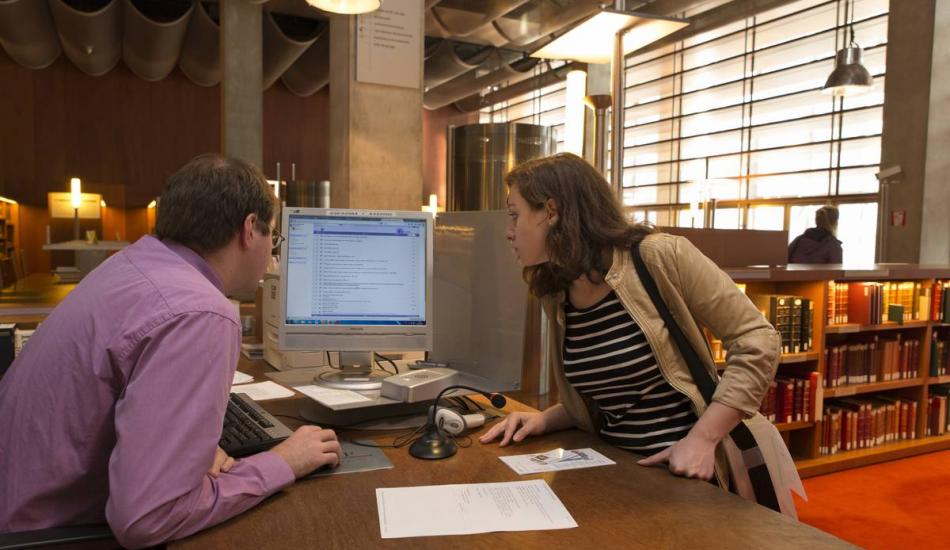
The Internet archives built up by BnF can be consulted in the Research library at the François Mitterrand Library (Site François-Mitterrand) and the Richelieu Library (Site Richelieu).
Since 1 August 2006, the Library has been charged with collecting, preserving, and providing access to “French domain” Internet sites under the legal deposit scheme (Act 2006-961).
As such, BnF’s priority is to collect the following sites:
- those ending in .fr
- those not ending in .fr (.com, .org, etc.) but whose authors are resident in France or whose content is produced in France
Sites are collected using harvester robots that copy pages, images, animations, and audio and video files. Sites are then dated and indexed before being reconstituted in their original published context. This means that the archives can be browsed just like the Internet, by clicking from link to link.
It is not possible to archive every site and every page within a site. BnF uses a combination of two archiving methods to build up
representative samples of the French Internet:
- Broad-scope data gathering is used to build up samples of several hundred thousand sites. Over the period from 2004 to 2008, these data gathering exercises were carried out once a year in partnership with the American Internet Archive foundation. BnF brought this data gathering activity in-house in 2010.
- Targeted data gathering is used to build up more complete and more frequent archives of a limited number of sites identified by librarians working either within a discipline (e.g. literature) or on a topic (e.g. the 2007 elections or sustainable development).
In 2010, BnF’s Internet archives contained approximately 13.6 billion files, some of which date back as far as 1996.
Various “guided tours” of the Internet archives present a selection of sites based around a given theme.
Sustainable development policies in the Internet Archives
Guided tour – Le Web vert : les politiques du développement durable
© BnF
Does Internet encourage the spread of initiatives for sustainable development? Do its records reveal, over time, fads or... sustainable commitments? To answer these questions, a new “guided tour” has been designed by the BnF and the Observatory on Corporate Social Responsibility. It shows many angles of sustainable development as seen through the websites of government, business and civil society.
“Militant websites” in the Internet archives
Guided tour – Web militant
© BnF
The sites included in the
Web militant “guided tour” illustrate the variety of forms of militant action and the diversity of contemporary “causes”: defending workers’ rights and benefits, movements among the socially excluded (e.g. illegal immigrants and the homeless) and against discrimination, ecological trends, alternative movements, etc.
Personal and literary journals in the Internet archives
Guided tour – (S') écrire en ligne : journaux personnels et littéraires
© BnF
The Internet is increasingly establishing itself as the vehicle for a new way of conceiving of writing and autobiographical expression. Drawing on a selection of archived sites, the
(S') écrire en ligne : journaux personnels et littéraires “guided tour” shows how the shift from paper to screen and the blog form have transformed not only the personal diary but also literary writing and critical analysis.
2002, 2004, and 2007 election sites in the Internet archives
Recorrido guiado – Cliquer, voter : l’Internet électoral
© BnF
The
Cliquer, voter : l’Internet électoral “guided tour” offers an illustrated and commented selection of sites by key players in and observers and witnesses of election campaigns (the 2002 and 2007 legislative elections and the 2004 regional and European elections).
To be noted
There is no list of sites available within the Internet archives. Searches must be carried out on computers in the reading rooms that can be used to consult the archives.
Readers wishing to access the Internet archives must be able to demonstrate a need to carry out academic, professional, or personal research requiring them to make use of the Research library’s collections.